5G Technology: Beyond the Hype, What You Need to Know
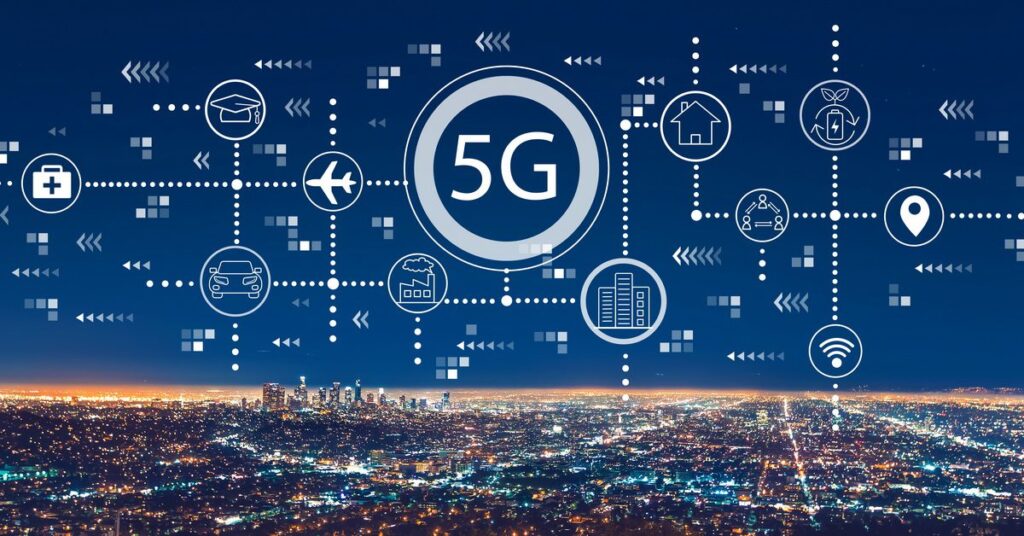
The advent of 5G technology has been touted as a game-changer, promising ultra-fast speeds, seamless connectivity, and transformative impacts across various industries. However, amidst the buzz and excitement, it’s crucial to delve deeper into what 5G truly entails and understand its implications beyond the surface level. In this article, we’ll explore the nuances of 5G technology, separating the hype from reality and shedding light on what individuals and businesses need to know to navigate the 5G landscape effectively.
Understanding 5G Technology
At its core, 5G technology represents the fifth generation of mobile networks, succeeding its predecessors – 4G, 3G, and so forth. Unlike its predecessors, 5G is not merely an incremental upgrade but rather a paradigm shift in wireless communication. It leverages advanced technologies such as millimeter-wave spectrum, massive MIMO (Multiple Input Multiple Output), and network slicing to deliver unprecedented speeds and connectivity.
One of the key distinguishing features of 5G is its remarkable speed. With theoretical download speeds reaching up to 20 gigabits per second (Gbps), 5G surpasses the capabilities of previous generations by leaps and bounds. This ultra-fast speed opens doors to a myriad of possibilities, from instant downloads of HD movies to real-time gaming experiences with minimal latency.
Furthermore, 5G technology boasts significantly lower latency compared to its predecessors. Latency refers to the time it takes for data to travel from the source to the destination and back again. With 5G, latency is reduced to mere milliseconds, enabling applications that demand instantaneous responsiveness, such as remote surgery, autonomous vehicles, and augmented reality (AR) experiences. The possibilities that this brings are limitless, especially in the field of the auto industry, where this kind of technology is widely used to make it easier for the driver, and if you care about your car, you can take it to an experienced transmission service in Buffalo for a diagnosis and upgrade for a safe and comfortable drive.
Impacts on Industries and Applications
The advent of 5G technology heralds transformative impacts across various industries, revolutionizing the way we live, work, and interact with technology. In the healthcare sector, for instance, 5G enables telemedicine applications with real-time video consultations, remote patient monitoring, and surgical procedures conducted by robotic systems operated from miles away. This contributes to a much greater and easier development of medicine, but also to a democratic view of health care that allows everyone to receive adequate treatment or therapy, such as treatment for autism, which is important for children diagnosed with this condition.
Likewise, the manufacturing industry stands to benefit significantly from the implementation of 5G technology. With ultra-reliable low latency communication (URLLC) capabilities, 5G facilitates the deployment of autonomous robots and drones for tasks such as inventory management, predictive maintenance, and logistics optimization, thereby enhancing efficiency and productivity on the factory floor.
Moreover, the entertainment and media industry is poised for a paradigm shift with the advent of 5G. The ultra-fast speeds and low latency of 5G networks pave the way for immersive experiences such as virtual reality (VR) gaming, live streaming of 4K and 8K content, and interactive storytelling, blurring the lines between the digital and physical worlds. This not only opens up the world of gaming but also allows people who are unable to physically attend to still stay up to date with some of the biggest events, festivals, pet fairs, or seminars, using this speed to feel like they are there.
Addressing Concerns and Challenges
Despite its immense potential, the widespread adoption of 5G technology is not without its challenges and concerns. One of the primary concerns surrounding 5G deployment is the issue of infrastructure readiness. Unlike previous generations, 5G networks require a dense infrastructure of small cells and base stations to deliver optimal performance, posing significant logistical and regulatory challenges for network operators.
Furthermore, there are concerns regarding the potential health effects of prolonged exposure to 5G electromagnetic radiation. While numerous studies have been conducted to assess the safety of 5G technology, the long-term impacts remain a subject of debate and scrutiny among health experts and regulatory bodies. This has significantly divided the public due to the large promotion of the story about the harmful effect of high exposure to such fields, however, if promotion is important to you in order to bring your business to the market you can turn to a great Colorado Springs SEO company that will create a successful promotion plan for you.
Another challenge associated with 5G technology is the issue of interoperability and standardization. As 5G networks continue to evolve and proliferate, ensuring compatibility and seamless integration with existing infrastructure and devices becomes paramount. Without standardized protocols and interoperable systems, the full potential of 5G technology may be hindered by fragmentation and compatibility issues. Therefore, it is very important to spread awareness and education about the use of such new technological advances so that the network can be used in the absolute most efficient way, just as only skilled hairdressers can handle sharp Japanese scissors, only expert and experienced scientists can manage such transmission protocols.
Exploring 5G’s Role in Smart Cities

The integration of 5G technology within urban environments has sparked a wave of innovation, paving the way for the development of smart cities. With its ultra-fast speeds and low latency, 5G enables a myriad of smart city applications, ranging from intelligent transportation systems and real-time traffic management to smart energy grids and environmental monitoring. By leveraging 5G connectivity, cities can enhance efficiency, sustainability, and quality of life for residents while addressing pressing urban challenges such as congestion, pollution, and resource management.
In addition to improving urban mobility and environmental sustainability, 5G technology plays a crucial role in enhancing public safety and emergency response capabilities in smart cities. With its high bandwidth and low latency, 5G enables real-time video surveillance, sensor-based monitoring, and predictive analytics, empowering law enforcement agencies and emergency responders to detect and respond to incidents more swiftly and effectively. From monitoring traffic flow and detecting accidents to identifying potential security threats and coordinating emergency responses, 5G-enabled smart city initiatives bolster resilience and enhance public safety in urban environments. However, if your privacy is more important to you, moving to some quieter neighborhoods or more rural areas is also not a bad idea, after choosing the perfect place for your life, count on excellent Los Angeles movers who can help you with things.
Moreover, 5G technology serves as a catalyst for economic growth and innovation in smart cities, attracting investment, fostering entrepreneurship, and creating new opportunities for businesses and startups. By providing high-speed internet access and digital infrastructure, 5G enables the proliferation of smart city services and applications, from e-commerce platforms and digital marketplaces to smart tourism initiatives and virtual event experiences. Furthermore, 5G-enabled smart city ecosystems stimulate job creation, talent retention, and economic development, positioning cities at the forefront of the digital economy and driving sustainable growth in the long run. This brings with it a number of useful jobs that many may engage in, often involving long periods of sitting at a computer, which is why it’s a good idea to consider getting an adequate ergonomic keyboard and equipment to maintain a physiological and pain-free posture.
Unlocking the Potential of IoT with 5G
The proliferation of Internet of Things (IoT) devices is poised to accelerate exponentially with the advent of 5G technology. With its ability to support a massive number of connected devices simultaneously, 5G unleashes the full potential of IoT applications across various domains, including healthcare, agriculture, manufacturing, and smart homes. From wearable health monitors and precision agriculture sensors to industrial automation and smart appliances, 5G-enabled IoT ecosystems usher in a new era of connectivity and data-driven innovation, revolutionizing how we interact with the world around us. This will also be able to help significantly in schools and in the education of children, and youngsters who are now having trouble studying and solving their tests as well as mastering difficult material but they can can rely on an excellent science tutor in Boulder.
Furthermore, 5G technology facilitates the convergence of IoT with other emerging technologies such as artificial intelligence (AI), edge computing, and blockchain, unlocking new possibilities for automation, optimization, and intelligence. By integrating AI algorithms and machine learning models with IoT sensors and devices, 5G enables autonomous decision-making, predictive analytics, and proactive maintenance in diverse applications, from predictive healthcare and smart farming to predictive maintenance and supply chain optimization. Moreover, the combination of 5G and edge computing empowers IoT deployments with real-time processing, analysis, and response capabilities, enabling mission-critical applications that demand instantaneous responsiveness and low latency.
Securing the Future of 5G Networks
As 5G networks continue to evolve and expand, ensuring their security and resilience becomes paramount. With the proliferation of connected devices and critical infrastructure relying on 5G connectivity, the stakes for cybersecurity have never been higher. From protecting against cyberattacks and data breaches to safeguarding user privacy and ensuring the integrity of network infrastructure, securing the future of 5G networks requires a multi-faceted approach that encompasses robust encryption protocols, threat intelligence, and collaboration among stakeholders across the ecosystem. Numerous public speaking coaches often give educational and valuable speeches about how to protect yourself from such potential attacks on the system, especially in this new world of technology that surrounds us everywhere.
Furthermore, securing 5G networks entails addressing vulnerabilities and mitigating risks associated with emerging technologies such as AI, IoT, and edge computing, which introduce new attack vectors and complexities. By implementing security-by-design principles and adopting proactive measures such as network segmentation, access control, and behavioral analytics, organizations can fortify their 5G infrastructures against evolving threats and adversaries. Moreover, fostering a culture of cybersecurity awareness and education is essential for empowering stakeholders to recognize and mitigate cyber risks effectively, thereby enhancing the overall resilience and trustworthiness of 5G networks. By using verified sites and applying good advice, individuals can protect themselves in the right way, and an Internet service provider that manages IT services in San Antonio provides its users with an excellent Internet with which they can quickly and easily find such information and protect themselves from possible attacks in time.
Empowering Rural Connectivity with 5G
While 5G technology holds immense promise for urban centers, its potential to bridge the digital divide and empower rural communities should not be overlooked. By extending 5G coverage to underserved rural areas, policymakers and network operators can democratize access to high-speed internet, education, healthcare, and economic opportunities. From precision agriculture and remote education to telemedicine and e-commerce, 5G-enabled rural connectivity unlocks new possibilities for social inclusion, economic development, and sustainable growth in rural communities around the globe. Big investors are already investing heavily in the development of such plans even though they themselves are enjoying the prosperity of these movements, however, so that you too can feel so rich, you can rent a limousine for your next big event from a limo service in Atlanta for a significant sense of sophistication and luxury.
Moreover, 5G technology facilitates the deployment of innovative solutions tailored to the unique needs and challenges of rural communities, from smart farming techniques and precision agriculture sensors to telehealth services and distance learning initiatives. By leveraging 5G connectivity, rural communities can overcome geographical barriers and access critical services and resources that were previously out of reach, thereby narrowing the digital divide and fostering equitable opportunities for all. Additionally, 5G-enabled rural connectivity stimulates entrepreneurship, job creation, and economic diversification in rural areas, driving sustainable development and prosperity in the long term. This also means a lot to the young members of the Readathon school fundraiser because they can more easily devote themselves to developing their good reading habits with technology that can provide them with a great visual experience for the different novels and books they can indulge in.
Harnessing Edge Computing in the 5G Era
The convergence of 5G technology and edge computing promises to revolutionize how data is processed, analyzed, and acted upon in real-time. By deploying computing resources closer to the point of data generation, edge computing reduces latency, enhances scalability, and enables mission-critical applications that demand instantaneous responsiveness. From autonomous vehicles and smart factories to augmented reality and immersive gaming experiences, harnessing the power of edge computing in the 5G era unlocks new dimensions of innovation and efficiency, transforming how we interact with technology in the digital age. This represents a significant improvement in the sphere of online courses as well because the participants will be able to indulge in their lessons as if they were physically there with the mentor, thus more easily expanding their knowledge and working on developing their skills in a proper way.
Moreover, the combination of 5G and edge computing enables distributed intelligence and decentralized decision-making, empowering devices and applications to process and respond to data autonomously without relying on centralized cloud infrastructure. This distributed architecture not only enhances privacy and data sovereignty but also mitigates the risk of network congestion and downtime, ensuring seamless performance and reliability in dynamic environments. Furthermore, edge computing enables new paradigms of computing such as federated learning and collaborative edge intelligence, where devices collaborate to train machine learning models and derive insights collectively while preserving data privacy and security. This can contribute to socializing at a distance, where each user with their snacks arranged on a fine cheese board can, even though they are physically far away, participate in joint activities as if they were together in one place, without problems.
Fostering Innovation Through Open RAN
Open Radio Access Network (Open RAN) architectures are poised to democratize the deployment and management of 5G networks, driving innovation and competition in the telecommunications industry. By decoupling hardware and software components and embracing open standards and interfaces, Open RAN enables network operators to deploy agile, cost-effective, and interoperable 5G infrastructures. From enhancing vendor diversity and accelerating network deployments to fostering innovation and reducing costs, Open RAN holds the potential to reshape the telecommunications landscape, empowering operators to deliver next-generation connectivity services that are more accessible, flexible, and resilient. If you rent a car in Beograd and visit some of the biggest scientific seminars in Europe, you will have a unique opportunity to learn a lot more about this complex and extremely important topic, which is part of our entry into the future.
Furthermore, Open RAN fosters collaboration and partnership among industry players, including network equipment vendors, software developers, and system integrators, driving collective innovation and accelerating the pace of 5G deployments worldwide. By embracing open ecosystems and interoperable solutions, operators can leverage a diverse marketplace of vendors and technologies, fostering competition, driving down costs, and accelerating innovation cycles. Moreover, Open RAN enables operators to future-proof their networks and adapt to evolving technology trends and customer demands, ensuring agility, scalability, and sustainability in the 5G era. The companies and big investors who are committed to the development of these ideas every day also offer special and creative promotional products to spread awareness and influence people around the world to research more about this and more easily accept this new technology that is inevitably coming.
Conclusion
Concluding the exploration of 5G technology across various domains, it’s evident that its impact extends far beyond mere connectivity, touching every aspect of our lives and reshaping industries, economies, and societies. As we navigate the complexities and opportunities presented by the 5G landscape, it’s imperative